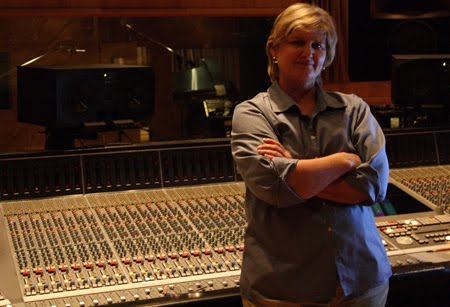
The Power of Simplicity in Songwriting
By Kim Copeland
Reprint from The Songwriters Connection E-Tip
(www.songwritersconnection.com)
Most up and coming songwriters have been told at least once to “be original”. Try to say something that hasn’t been said before or to say it in a new way. Easier said than done, right?
…Maybe so.
Too often we strangle our creativity by trying to be too profound, too clever, too original. Listen to the radio. Most radio hits contain elements of familiarity combined with a new twist. They aren’t reinventing the wheel. They just give us enough new to make the old sound fresh.
Listeners want to feel engaged and comfortable while listening to songs. They don’t want to think as much as feel. Music is more emotional than intellectual. Complex lyrics and musical structures have their place, but in commercial songwriting, they are rarely the songs that “break” songwriting careers. Those songs are written for the writer, not the audience. If you hope to find commercial success as a songwriter, you owe it to yourself to try to understand what listeners respond to. Why they are drawn to some songs over others. What makes them willing to pay for some songs so they can listen to them over and over again?
Simplicity is a powerful tool in songwriting. If you can wrap a deep message within a catchy, repetitive melody, you’ve got a hit. If you can create a groove that makes the listener immediately feel comfortable wanting to move to it, you’ve got a hit. By combining simple elements that any listener can get involved with easily and quickly, and original elements (whatever you do differently than anyone else), you create a fresh, new product that can attract a mass audience.
When you play to your strengths by doing what comes naturally to you, you make writing songs easier and you write better songs. Keep it simple by identifying elements that work for you and combining them in a way that works for audiences.
Study what people respond to about your songs. Once you have identified it, let that be the unique factor that you showcase in all of your writing. It could be your language; the way you express yourself or your ideas. It might be your musical gift; the chord voicings you use or the particular texture and tone of your instrument, be it guitar or voice. Perhaps you feel grooves and phrasing that is different and hooks people into your songs.
Study hit songs from several genres, and try to determine what about the song is infectious to listeners. Is it the groove, the hooky message, the musical riff, the sing along melody? Next, choose one element from each of two or three different hit songs, and combine them with one of your lyrical ideas. Maybe a repetitive chord structure from one song combined with the groove of another. Now add your original lyric to it and see if it gives you a presentation for your song that now contains some proven elements with some fresh new ones. Almost every hit song has something that is familiar hidden within it, either by design or accident.
I am certainly NOT encouraging you to plagiarize anyone’s work; but studying it, learning from it and using that knowledge to help you break through the wall of commercial songwriting is encouraged. We are all conglomerates of what we have seen, heard, felt, and absorbed. By using your experiences, talents and personal musical tastes you will create an original voice for yourself as a songwriter. Hopefully, one that will help you stand out as original while attracting a mass audience.
When you hear “be original” and “this is a little TOO different – I don’t know what to do with it” in the same conversation, perhaps you are trying too hard. Try being original within the structure of familiarity and see if not only makes your songwriting life easier, but also elevates your standing in the commercial market.
Wednesday, February 29, 2012


Sunday, June 19, 2011
Condense It!
by Kim Copeland
One of my production and critique clients recently had an epiphany regarding song structure in today’s market that I’d like to share with you here, as it reaffirms some of my most frequently dispensed songwriting advice…less is more!
Approximately ninety percent of the songs currently airing on CMT have four lines of lyric before they hit the chorus. Of the remaining ten percent, I’d say that nine have a four line verse and a two line channel, and only one percent have eight lines of verse preceding the chorus.
If you are using lengthy verses to explain your story to the listener, you may be losing them before you get to the punch line (chorus). Try evaluating some of your eight line verses to see if they can be condensed into four lines. Determine which information contained there is truly relevant to the listener’s understanding of the story. Be sure to give only the important factual and emotional information without any superfluous words or lines that may confuse your audience or lose their attention.
It is very important to learn what is selling in the market you are competing in, if you want to succeed. The old adage, “Don’t bore us, get to the chorus” still rings true in today’s song market. With this one tool of learning to say more with fewer words you can take your songwriting to a new, more commercial level.
One of my production and critique clients recently had an epiphany regarding song structure in today’s market that I’d like to share with you here, as it reaffirms some of my most frequently dispensed songwriting advice…less is more!
Approximately ninety percent of the songs currently airing on CMT have four lines of lyric before they hit the chorus. Of the remaining ten percent, I’d say that nine have a four line verse and a two line channel, and only one percent have eight lines of verse preceding the chorus.
If you are using lengthy verses to explain your story to the listener, you may be losing them before you get to the punch line (chorus). Try evaluating some of your eight line verses to see if they can be condensed into four lines. Determine which information contained there is truly relevant to the listener’s understanding of the story. Be sure to give only the important factual and emotional information without any superfluous words or lines that may confuse your audience or lose their attention.
It is very important to learn what is selling in the market you are competing in, if you want to succeed. The old adage, “Don’t bore us, get to the chorus” still rings true in today’s song market. With this one tool of learning to say more with fewer words you can take your songwriting to a new, more commercial level.
The Christopher Columbus Approach To Songwriting
by Kim Copeland
In the writing process: Explore every angle for the idea; every possible character perspective; every scenery option and every timeline. When the muse sends you a full song, write it and say thank you. But before you spend money on the demo or put it in your finished file, explore these elements to make sure that you have exploited that idea to the fullest. If your goals are commercial songwriting, “uniqueness” is your best friend. You can practice what has been written before to hone your skills, but exploring until you discover the uniqueness of an idea will be your key to success.
In the pre-production process: Explore every possible groove, chord voicing, instrumentation and arrangement idea. It costs nothing but your time and is immensely valuable. If you are working with a producer you trust, they will help with a lot of this exploration. That is their job and talent. Participate to the best of your abilities and be willing to learn from what others can offer.
In production: Surround yourself with creative musicians, producer and vocalists and let them explore with you and for you. Hire people you admire and trust and then turn them loose to see where your song leads them. If you don’t like the results, you can always reel them back in, but you may miss something great if you tie their hands.
Ultimately, writing a great song is a wonderful journey. Enjoy the journey. Rather than rushing to the finish line, listen to the idea and let it lead you where it wants to go.
In the writing process: Explore every angle for the idea; every possible character perspective; every scenery option and every timeline. When the muse sends you a full song, write it and say thank you. But before you spend money on the demo or put it in your finished file, explore these elements to make sure that you have exploited that idea to the fullest. If your goals are commercial songwriting, “uniqueness” is your best friend. You can practice what has been written before to hone your skills, but exploring until you discover the uniqueness of an idea will be your key to success.
In the pre-production process: Explore every possible groove, chord voicing, instrumentation and arrangement idea. It costs nothing but your time and is immensely valuable. If you are working with a producer you trust, they will help with a lot of this exploration. That is their job and talent. Participate to the best of your abilities and be willing to learn from what others can offer.
In production: Surround yourself with creative musicians, producer and vocalists and let them explore with you and for you. Hire people you admire and trust and then turn them loose to see where your song leads them. If you don’t like the results, you can always reel them back in, but you may miss something great if you tie their hands.
Ultimately, writing a great song is a wonderful journey. Enjoy the journey. Rather than rushing to the finish line, listen to the idea and let it lead you where it wants to go.
“It’s all in HOW you say WHAT you’ve got to say”
By Kim Copeland
We all know that it is best to write what you know. It’s even better to write what you know in a way that makes people want to hear it.
I have production and critique clients constantly asking me to explain songs that make it onto the radio with lyrics that are less than profound or melodies that are seemingly mundane. There are many factors in play when it comes to getting songs on the radio. Few have to do with the quality of the material.
However, songs that become classics, that remain in our hearts and minds and create the soundtrack of our lives, those I can explain. Those songs are written with grooves, melodies and words (not just lyrics, but words) that invite the listener to participate. They are fun to sing, or cry to or make love to or laugh with. They are messages that are presented in such a way that the listener can’t help but feel a specific emotion while listening to them.
I have had the pleasure to work with some amazing artists and songwriters in my career. Sometimes I work on projects where the singer’s delivery carries the song. Sometimes a song is so creative and original that many singers could sell t equally well. In every situation, the goal is the same. To create an infectious recording that cannot be ignored by the listener.
If you want to say “I love you” in a song, you have to find a new way to say it to get noticed. It may be the melody. Try singing that phrase at least five different ways before you settle on one. (Put the accent on a different syllable. Take the melody up on different syllables to see which expresses the emotion best. Start the melody high and cascade down on the phrase. Start the melody low and soar on the “you”, etc.
Now explore rhythm. Try five different grooves, tempos, attitudes for the message. (Yes, “I love you” can be expressed with anger, sadness, fear or surprise!)
Next, think about the presentation for your message. Different instrumentation can express different emotion. The same way a singer uses dynamics to sell the emotion of a song, a songwriter can use instrumentation.
There are probably still some totally unique ideas left for songwriters to discover. There are way more unique ways to use old ideas. There will always be common emotions to write about. Love will always have an audience.
Perhaps the way to songwriting success is less about WHAT to say, and more about HOW to say it. Clever alliteration will sometimes get you a lot further down the path to success than thought provoking brilliance (“Achey, Breaky Heart”, “Itsy, Bitsy, Teeny, Weeny, Yellow, Polka, Dot Bikini”). A beautiful melody that can make you cry or dance or remember, even without the lyric present (“Can you Feel the Love Tonight”, “Imagine”) will keep people humming it far beyond the life of radio. A groove that makes you want to move creates its own life (“I Feel Good”, “Poker Face”, “Twist and Shout”).
As you are learning and practicing the “rules” of songwriting and stressing over what to say during your upcoming writing sessions, take a moment to think about how to say something. Think about how you can you use language, rhythm, melody and instrumentation to “hook” your audience. See if the how can lead you to the what. And when you end up writing your most popular song ever, don’t apologize for it or overanalyze it. Just appreciate the fact that you have become a well rounded, commercial songwriter with more ways to reach a mass audience.
I am working on an album project right now with an amazingly talented young songwriter/artist. Do her songs break some songwriting rules? Yes. (She’s young.) Do I care about that when I am listening to them and taping my foot and feeling the emotion of them? NO! (She’s great!) Because music is an exchange of emotion and at the end of the proverbial day, it doesn’t matter what you say. It only matters how your audience feels about it.
We all know that it is best to write what you know. It’s even better to write what you know in a way that makes people want to hear it.
I have production and critique clients constantly asking me to explain songs that make it onto the radio with lyrics that are less than profound or melodies that are seemingly mundane. There are many factors in play when it comes to getting songs on the radio. Few have to do with the quality of the material.
However, songs that become classics, that remain in our hearts and minds and create the soundtrack of our lives, those I can explain. Those songs are written with grooves, melodies and words (not just lyrics, but words) that invite the listener to participate. They are fun to sing, or cry to or make love to or laugh with. They are messages that are presented in such a way that the listener can’t help but feel a specific emotion while listening to them.
I have had the pleasure to work with some amazing artists and songwriters in my career. Sometimes I work on projects where the singer’s delivery carries the song. Sometimes a song is so creative and original that many singers could sell t equally well. In every situation, the goal is the same. To create an infectious recording that cannot be ignored by the listener.
If you want to say “I love you” in a song, you have to find a new way to say it to get noticed. It may be the melody. Try singing that phrase at least five different ways before you settle on one. (Put the accent on a different syllable. Take the melody up on different syllables to see which expresses the emotion best. Start the melody high and cascade down on the phrase. Start the melody low and soar on the “you”, etc.
Now explore rhythm. Try five different grooves, tempos, attitudes for the message. (Yes, “I love you” can be expressed with anger, sadness, fear or surprise!)
Next, think about the presentation for your message. Different instrumentation can express different emotion. The same way a singer uses dynamics to sell the emotion of a song, a songwriter can use instrumentation.
There are probably still some totally unique ideas left for songwriters to discover. There are way more unique ways to use old ideas. There will always be common emotions to write about. Love will always have an audience.
Perhaps the way to songwriting success is less about WHAT to say, and more about HOW to say it. Clever alliteration will sometimes get you a lot further down the path to success than thought provoking brilliance (“Achey, Breaky Heart”, “Itsy, Bitsy, Teeny, Weeny, Yellow, Polka, Dot Bikini”). A beautiful melody that can make you cry or dance or remember, even without the lyric present (“Can you Feel the Love Tonight”, “Imagine”) will keep people humming it far beyond the life of radio. A groove that makes you want to move creates its own life (“I Feel Good”, “Poker Face”, “Twist and Shout”).
As you are learning and practicing the “rules” of songwriting and stressing over what to say during your upcoming writing sessions, take a moment to think about how to say something. Think about how you can you use language, rhythm, melody and instrumentation to “hook” your audience. See if the how can lead you to the what. And when you end up writing your most popular song ever, don’t apologize for it or overanalyze it. Just appreciate the fact that you have become a well rounded, commercial songwriter with more ways to reach a mass audience.
I am working on an album project right now with an amazingly talented young songwriter/artist. Do her songs break some songwriting rules? Yes. (She’s young.) Do I care about that when I am listening to them and taping my foot and feeling the emotion of them? NO! (She’s great!) Because music is an exchange of emotion and at the end of the proverbial day, it doesn’t matter what you say. It only matters how your audience feels about it.
Sunday, May 23, 2010
Creative Communities
Last night in Nashville I witnessed the highest form of inspirational motivation!
My heroes, Carole King and James Taylor, two humble, average looking people (though we know they are giants!) climbed the steps and took the stage about ten feet in front of me and spent the next three hours reminding me why I write, perform and produce music.
They didn’t do what they do to inspire me. They didn’t do it to impress the star-studded audience that turned out for them. They did it because they love singing, playing, writing and performing together! And in the simple pleasure of sharing their songs and energy with each other, they transformed us.
We see a lot of talent here in Nashville. We are blessed with many options, on any given day of any given week, to hear great singing and songwriting. But this was a once in a lifetime opportunity to have two creative beings of this caliber in our midst, sharing stories and intimate moments.
We all grow together when we share our collective creative spirit. These two legends did not become legends by clawing their way to the top. They arrived at that status accidentally, as a by-product of living their lives in the most creative way they could. They established lives for themselves that allowed room for creativity. They were brave enough to follow the muse where it led them. They honored their gift; and continue to. That is why we show up to bask in their light; because it is a rare sight to see two people so in tune with their creative spirit and so honest in their love of the journey.
So many of us list Carole King and James Taylor among our musical influences. I encourage you to allow them to influence you now; not only musically, but spiritually. Whether you are familiar with their musical work or not, research it today. Read about the scene they grew up in, musically. Study the structure of their songs, lyrics, melody and music. Understand the musical freedom they nurture in themselves and those around them. I promise you will grow from the experience
When the business side of songwriting threatens the creative side; when you can’t rise to one more co-writing appointment; when your guitar refuses to speak to you - go back to your roots! Remember the first time you felt inspired to play your piano or guitar or write a poem or hum an original melody? That feeling is the one you need to nurture. Find your creative community and make a habit of sharing and appreciating all of the talent and spiritual energy in that community.
Our Nashville music community now includes many songwriters and artists from every genre. (One look around the inner circle at last night’s show is proof of that!) And we are richer for it. How pleasant it was to take a break from analyzing performances and songs or looking to see who’s looking, and be reminded of the beautiful, healing force of song.
In the wake of recent floods and devastation in Nashville, this show (the first in the arena since the floods) was such a lift for our spirits. Carole King even wrote a special verse on ‘you’ve Got a Friend’ just for us!
I think I am safe in saying that all of us left this show with our souls rejuvenated. Thank you Carole and James! Please come back soon.
I wish you all inspiration and a sense of creative community. If you can’t find it where you are, build it. Or come to Nashville. We always have room for one more.
My heroes, Carole King and James Taylor, two humble, average looking people (though we know they are giants!) climbed the steps and took the stage about ten feet in front of me and spent the next three hours reminding me why I write, perform and produce music.
They didn’t do what they do to inspire me. They didn’t do it to impress the star-studded audience that turned out for them. They did it because they love singing, playing, writing and performing together! And in the simple pleasure of sharing their songs and energy with each other, they transformed us.
We see a lot of talent here in Nashville. We are blessed with many options, on any given day of any given week, to hear great singing and songwriting. But this was a once in a lifetime opportunity to have two creative beings of this caliber in our midst, sharing stories and intimate moments.
We all grow together when we share our collective creative spirit. These two legends did not become legends by clawing their way to the top. They arrived at that status accidentally, as a by-product of living their lives in the most creative way they could. They established lives for themselves that allowed room for creativity. They were brave enough to follow the muse where it led them. They honored their gift; and continue to. That is why we show up to bask in their light; because it is a rare sight to see two people so in tune with their creative spirit and so honest in their love of the journey.
So many of us list Carole King and James Taylor among our musical influences. I encourage you to allow them to influence you now; not only musically, but spiritually. Whether you are familiar with their musical work or not, research it today. Read about the scene they grew up in, musically. Study the structure of their songs, lyrics, melody and music. Understand the musical freedom they nurture in themselves and those around them. I promise you will grow from the experience
When the business side of songwriting threatens the creative side; when you can’t rise to one more co-writing appointment; when your guitar refuses to speak to you - go back to your roots! Remember the first time you felt inspired to play your piano or guitar or write a poem or hum an original melody? That feeling is the one you need to nurture. Find your creative community and make a habit of sharing and appreciating all of the talent and spiritual energy in that community.
Our Nashville music community now includes many songwriters and artists from every genre. (One look around the inner circle at last night’s show is proof of that!) And we are richer for it. How pleasant it was to take a break from analyzing performances and songs or looking to see who’s looking, and be reminded of the beautiful, healing force of song.
In the wake of recent floods and devastation in Nashville, this show (the first in the arena since the floods) was such a lift for our spirits. Carole King even wrote a special verse on ‘you’ve Got a Friend’ just for us!
I think I am safe in saying that all of us left this show with our souls rejuvenated. Thank you Carole and James! Please come back soon.
I wish you all inspiration and a sense of creative community. If you can’t find it where you are, build it. Or come to Nashville. We always have room for one more.
Wednesday, April 7, 2010
Creative Responsibility
(reprint from the Songwriters Connection E-Tip. songwritersconnection.com to sign up)
By Kim Copeland
We are all in a different place on our songwriting journey. Some of us are great musicians, some beginners. Some of us are great singers, some can’t carry a tune. Some of us have natural rhythm, some struggle to keep a steady tempo. Some of us are poets while others of us ramble aimlessly, confusing the listener as we go.
The beauty of this ever shrinking world we live in is that you are never far away from someone whose strengths compliment your weaknesses. As you identify and own your strengths and weaknesses you can, and should, seek out fellow creative beings that can fill in the gaps for you and improve your chances of songwriting success and fulfillment. In doing so, you will become more self sufficient and better able to take responsibility for your songs.
“Songwriting” means something different to each of us. We all use the gifts we have and try to find some basic understanding of those we aren’t blessed with in hopes of improving our songwriting experience. This process can be fulfilling or frustrating; often times both. It should help to know that you do not have to be a great musician or singer to be a great songwriter. If you can feel or hear your idea, you can find a way to express it and present it to the world. It isn’t hard to cast a creative team to fill the roles you can’t.
Here are some key elements to creating a good, commercial song and where the creative responsibility lies for each.
1. Rhyme scheme - Songwriter
2 . Song Structure – Songwriter/Producer (You should have the basic structure down, but be flexible in case musicians or producer come up with some creative modifications in the studio that you had not thought of.)
3. Attitude – Songwriter/Producer (Production should enhance it, but you should know what attitude you are going for before you get into the studio. If you cannot express it, use other commercial songs as examples to illustrate this to musicians, vocalists, producer, etc.)
4. Emotion – Songwriter/Producer (Though production should enhance and showcase the emotional impact of the song, it is the writer’s responsibility to create the emotion in the lyric and melody.)
5. Range – Songwriter/Producer (You should have the range of the melody written to showcase the lyrical emotion. The producer and/or singer may embellish it somewhat to match the musical track.)
6. Phrasing – Producer/Songwriter (Though you should have the melodic and lyrical phrasing written into your song, you should also give the musicians, producer and vocalist some latitude with them to allow the song to evolve in the creative process of recording it.)
7. Melody ad lib – Producer/Vocalist/Songwriter (Whether you are singing your own demo or hiring a professional demo singer, be open to exploring ad libs that can enhance the emotional impact of your song.)
8. Instrumentation (chord voicings) – Producer/Musicians/ Songwriter (You may have chord voicings that work great with one guitar, but not with a full band. Sustained chords, sevenths, etc should be used as coloring. Trust the producer to find the compromise that brings out the flavoring you like without letting it interfere with the vocal and musical theme of your song.)
9. Musical signature lick, groove, arrangement, vocal harmonies and background vocals, vocal and musical phrasing – Producer/Songwriter/Musicians (You may have a signature lick written into your song, If so, let the producer build it into the full production to fit the groove and attitude of your song. If you have ideas on harmony and background vocals, that is great. But if you don’t hear these things, the producer will. This is not something that you have to provide as the songwriter. All of this falls under the umbrella of production. Your producer should work with you to incorporate your ideas into the big picture in the way that best serves your song and your goals for the recording.)
Whether or not you are a great musician, singer, or linguist, your responsibility as a songwriter is to present your idea in a clear way that the audience can easily follow and be drawn into, and to move the listener emotionally. Few of us can do it all. Focus on the elements that you can do well and seek out others to help with the rest. By learning where to put your energy to good use and where not to waste it, you can relax and focus and make better use of your creative time and energy.
By Kim Copeland
We are all in a different place on our songwriting journey. Some of us are great musicians, some beginners. Some of us are great singers, some can’t carry a tune. Some of us have natural rhythm, some struggle to keep a steady tempo. Some of us are poets while others of us ramble aimlessly, confusing the listener as we go.
The beauty of this ever shrinking world we live in is that you are never far away from someone whose strengths compliment your weaknesses. As you identify and own your strengths and weaknesses you can, and should, seek out fellow creative beings that can fill in the gaps for you and improve your chances of songwriting success and fulfillment. In doing so, you will become more self sufficient and better able to take responsibility for your songs.
“Songwriting” means something different to each of us. We all use the gifts we have and try to find some basic understanding of those we aren’t blessed with in hopes of improving our songwriting experience. This process can be fulfilling or frustrating; often times both. It should help to know that you do not have to be a great musician or singer to be a great songwriter. If you can feel or hear your idea, you can find a way to express it and present it to the world. It isn’t hard to cast a creative team to fill the roles you can’t.
Here are some key elements to creating a good, commercial song and where the creative responsibility lies for each.
1. Rhyme scheme - Songwriter
2 . Song Structure – Songwriter/Producer (You should have the basic structure down, but be flexible in case musicians or producer come up with some creative modifications in the studio that you had not thought of.)
3. Attitude – Songwriter/Producer (Production should enhance it, but you should know what attitude you are going for before you get into the studio. If you cannot express it, use other commercial songs as examples to illustrate this to musicians, vocalists, producer, etc.)
4. Emotion – Songwriter/Producer (Though production should enhance and showcase the emotional impact of the song, it is the writer’s responsibility to create the emotion in the lyric and melody.)
5. Range – Songwriter/Producer (You should have the range of the melody written to showcase the lyrical emotion. The producer and/or singer may embellish it somewhat to match the musical track.)
6. Phrasing – Producer/Songwriter (Though you should have the melodic and lyrical phrasing written into your song, you should also give the musicians, producer and vocalist some latitude with them to allow the song to evolve in the creative process of recording it.)
7. Melody ad lib – Producer/Vocalist/Songwriter (Whether you are singing your own demo or hiring a professional demo singer, be open to exploring ad libs that can enhance the emotional impact of your song.)
8. Instrumentation (chord voicings) – Producer/Musicians/ Songwriter (You may have chord voicings that work great with one guitar, but not with a full band. Sustained chords, sevenths, etc should be used as coloring. Trust the producer to find the compromise that brings out the flavoring you like without letting it interfere with the vocal and musical theme of your song.)
9. Musical signature lick, groove, arrangement, vocal harmonies and background vocals, vocal and musical phrasing – Producer/Songwriter/Musicians (You may have a signature lick written into your song, If so, let the producer build it into the full production to fit the groove and attitude of your song. If you have ideas on harmony and background vocals, that is great. But if you don’t hear these things, the producer will. This is not something that you have to provide as the songwriter. All of this falls under the umbrella of production. Your producer should work with you to incorporate your ideas into the big picture in the way that best serves your song and your goals for the recording.)
Whether or not you are a great musician, singer, or linguist, your responsibility as a songwriter is to present your idea in a clear way that the audience can easily follow and be drawn into, and to move the listener emotionally. Few of us can do it all. Focus on the elements that you can do well and seek out others to help with the rest. By learning where to put your energy to good use and where not to waste it, you can relax and focus and make better use of your creative time and energy.
Sunday, March 28, 2010
The Art Of The Pitch
(reprint from The Songwriters Connection E-Tip- go to songwritersconnection.com to receive the newsletter)
By Kim Copeland
In today’s market there are many more artist vying for fewer and fewer artist slots. Record labels are merging, artist rosters are shrinking as labels search for some solution to their financial troubles. While lots of independent artists are going out on their own, many still need the support of a record label to launch or maintain their music career.
It is more important than ever that you present yourself to a label in a way that stands out from the crowd. You need a pitch package that makes them see you as a good business partner and someone they can have business success with.
Think of your pitch package as your initial job interview. It is your first impression on your potential boss/investor. The powers that be will use this package to determine whether they are interested enough to call you in for a live interview/audition. That is the goal of a pitch package; to get you to the next step, the live audition.
There is an ‘expected and accepted’ presentation. A typical pitch package includes a bio, a head shot and an audio sample. Your challenge is to find a way to look professional and polished yet also unique and more interesting than the dozens of other packages they will see that month. Here are a few tips that will help you accomplish this.
First, be sure that your picture/head shot shows you as an artist! Many people submit pictures that would look great on a living room wall as part of a family collection, but what your grandma thinks is a pretty photograph of you is probably not what record labels are looking for in an artist. You need a high quality photograph that makes you look natural, but artistic. (Hint: the cover shots you see on magazines are NEVER a “snapshot”. They are posed, with correct lighting and expression to “sell” them to the audience.) That is what you need in your pitch package; something that makes you bigger than life.
Secondly, the audio piece of your package should be above demo standards. You need a producer who will work with you to bring out your uniqueness as an artist. Singing pretty is not enough. A clean recording of your pretty singing is not enough. You need to work with someone who understands vocal delivery as well as vocal technique and can help you showcase your ARTIST potential, not just your singing ability. You need powerful, original songs, whether you write them yourself or get them from other writer’s catalogs.
I recommend recording five or six songs and choosing the best three of those for your pitch package presentation. You save money by recording five songs at the same time, rather than going back to the studio for a second session to record more at a later time. (Another advantage to recording at least five songs is that you also have a marketable EP to be selling at your shows and on the web. It gives you options so you can customize your pitch package, depending on who you are pitching to. And, should they ask to hear more, you can strike while the iron is hot by following up with the other songs right away, rather than asking them to wait while you find and record more.
Last, your biography should be concise and interesting. Remember that they are not looking for a scrapbook of your favorite childhood memories. They want to know what you have accomplished for yourself with regard to your music career, how ready you are to step into the artist role and your potential to help them with your career so that you both make money. (After all, it is the music BUSINESS!)
I recommend that you keep your bio short; personal, friendly and interesting, but focused. Put yourself you their side of the desk and ask yourself, “What facts would I be interested in knowing about a potential business partner?” It is a good idea to have someone else write your bio for you. It is much easier for someone else to brag on your accomplishments. And, they will have an easier time staying focused on the objective.
A nice addition to the pitch package is a “one sheet”. This is an additional, two sided sheet of paper that may include thumbnail pictures (personality shots, live performance shots, etc), endorsements, and reviews.
And here is the last, and most important piece of advice: Be sure that your contact information is on EVERY piece of your pitch package! Assume that it will get separated and that some piece of it will end up in the hands of someone who wants to contact you. If they have to look for it, you may lose your moment of opportunity.
Remember that you are pitching yourself to professionals who are looking for professionals to work with. They do not care about making your dreams come true. They care about a mutually beneficial working relationship. You will get further by using your pitch package to convince them that you are a)ready and equipped for the job you are asking for, and b) hard working, than that you deserve for them to give you a lot of money and attention because you have a dream.
Hope this helps you aspiring artist out there! Good luck to you all on your creative journeys!
By Kim Copeland
In today’s market there are many more artist vying for fewer and fewer artist slots. Record labels are merging, artist rosters are shrinking as labels search for some solution to their financial troubles. While lots of independent artists are going out on their own, many still need the support of a record label to launch or maintain their music career.
It is more important than ever that you present yourself to a label in a way that stands out from the crowd. You need a pitch package that makes them see you as a good business partner and someone they can have business success with.
Think of your pitch package as your initial job interview. It is your first impression on your potential boss/investor. The powers that be will use this package to determine whether they are interested enough to call you in for a live interview/audition. That is the goal of a pitch package; to get you to the next step, the live audition.
There is an ‘expected and accepted’ presentation. A typical pitch package includes a bio, a head shot and an audio sample. Your challenge is to find a way to look professional and polished yet also unique and more interesting than the dozens of other packages they will see that month. Here are a few tips that will help you accomplish this.
First, be sure that your picture/head shot shows you as an artist! Many people submit pictures that would look great on a living room wall as part of a family collection, but what your grandma thinks is a pretty photograph of you is probably not what record labels are looking for in an artist. You need a high quality photograph that makes you look natural, but artistic. (Hint: the cover shots you see on magazines are NEVER a “snapshot”. They are posed, with correct lighting and expression to “sell” them to the audience.) That is what you need in your pitch package; something that makes you bigger than life.
Secondly, the audio piece of your package should be above demo standards. You need a producer who will work with you to bring out your uniqueness as an artist. Singing pretty is not enough. A clean recording of your pretty singing is not enough. You need to work with someone who understands vocal delivery as well as vocal technique and can help you showcase your ARTIST potential, not just your singing ability. You need powerful, original songs, whether you write them yourself or get them from other writer’s catalogs.
I recommend recording five or six songs and choosing the best three of those for your pitch package presentation. You save money by recording five songs at the same time, rather than going back to the studio for a second session to record more at a later time. (Another advantage to recording at least five songs is that you also have a marketable EP to be selling at your shows and on the web. It gives you options so you can customize your pitch package, depending on who you are pitching to. And, should they ask to hear more, you can strike while the iron is hot by following up with the other songs right away, rather than asking them to wait while you find and record more.
Last, your biography should be concise and interesting. Remember that they are not looking for a scrapbook of your favorite childhood memories. They want to know what you have accomplished for yourself with regard to your music career, how ready you are to step into the artist role and your potential to help them with your career so that you both make money. (After all, it is the music BUSINESS!)
I recommend that you keep your bio short; personal, friendly and interesting, but focused. Put yourself you their side of the desk and ask yourself, “What facts would I be interested in knowing about a potential business partner?” It is a good idea to have someone else write your bio for you. It is much easier for someone else to brag on your accomplishments. And, they will have an easier time staying focused on the objective.
A nice addition to the pitch package is a “one sheet”. This is an additional, two sided sheet of paper that may include thumbnail pictures (personality shots, live performance shots, etc), endorsements, and reviews.
And here is the last, and most important piece of advice: Be sure that your contact information is on EVERY piece of your pitch package! Assume that it will get separated and that some piece of it will end up in the hands of someone who wants to contact you. If they have to look for it, you may lose your moment of opportunity.
Remember that you are pitching yourself to professionals who are looking for professionals to work with. They do not care about making your dreams come true. They care about a mutually beneficial working relationship. You will get further by using your pitch package to convince them that you are a)ready and equipped for the job you are asking for, and b) hard working, than that you deserve for them to give you a lot of money and attention because you have a dream.
Hope this helps you aspiring artist out there! Good luck to you all on your creative journeys!
Subscribe to:
Posts (Atom)
